7 Soviet poster techniques designers still use today — without realizing it
Open any bold branding project, a modern music festival poster, or a well-designed app landing page. Chances are you're looking at design decisions that were figured out in Moscow and Leningrad a hundred years ago.
Soviet graphic design — particularly the constructivist movement of the 1920s — was built under extreme constraints: limited ink colors, mass printing technology, and the need to communicate instantly to audiences with varying literacy levels. Designers like Alexander Rodchenko, El Lissitzky, and Gustav Klutsis weren't decorating walls — they were solving communication problems under pressure. Here are seven techniques they developed that never really went away.
1. The diagonal as a direction
Classic Soviet posters often broke from the static, centered compositions of European print tradition, introducing aggressive diagonals — lines, figures, and type set at sharp angles to create movement and urgency. Where a horizontal composition rests, a diagonal pushes. It implies motion, momentum, and direction without a single word of instruction.
Designers can explore these techniques themselves using a plakat mockup, testing how dynamic compositions guide the eye and how layouts behave in realistic settings.
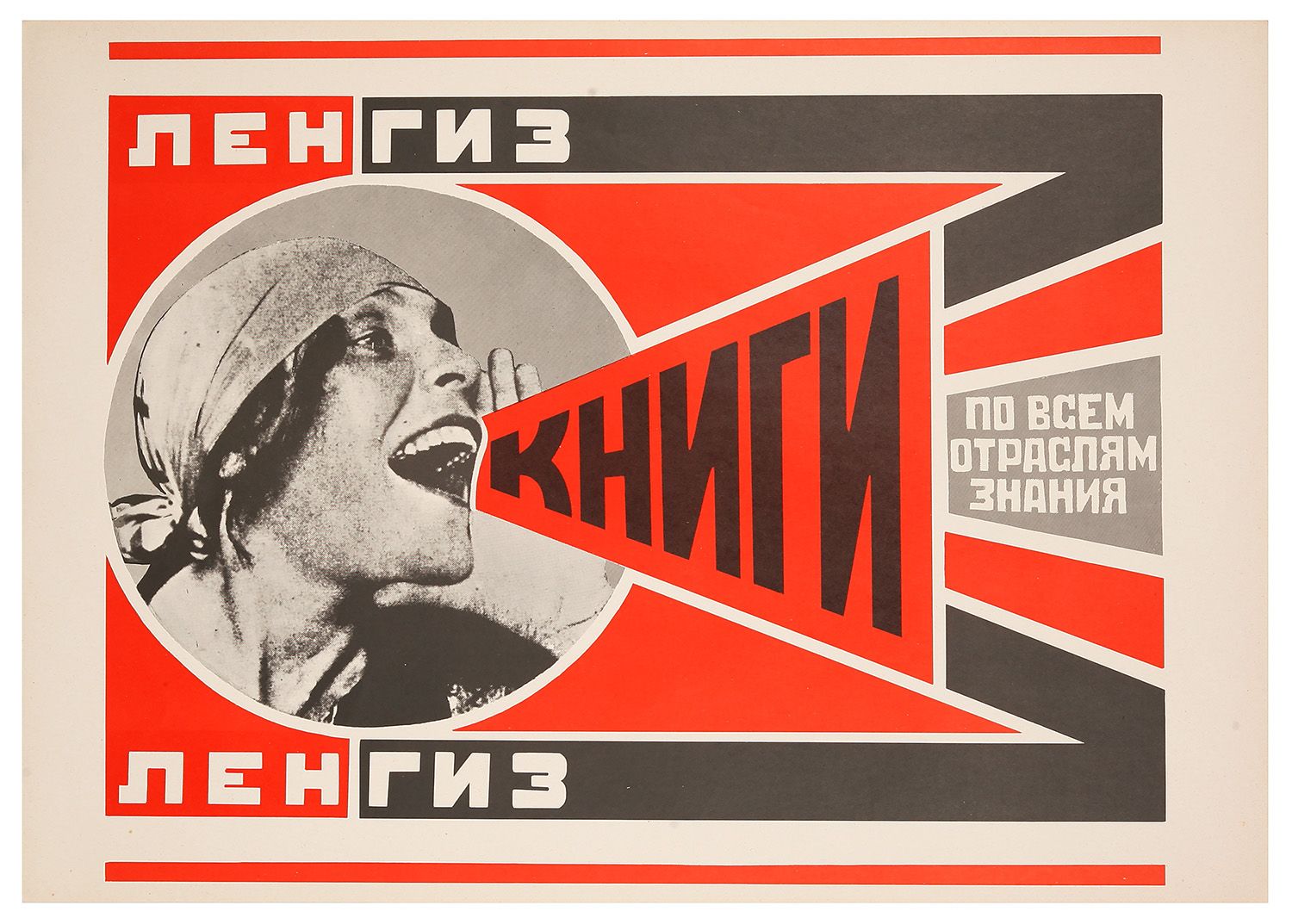 A. Rodchenko - “Books”, 1924
2. Maximum contrast, minimum colors
Most constructivist posters worked with two or three colors at most. Red, black, and white were the dominant combination — not because of aesthetic preference, but because of printing limitations and the need for visibility at large scale and at a distance. The result was not a limitation but a system: every element either receded or demanded attention. Nothing competed without purpose.
Modern designers rediscovered this logic through flat design, bold branding, and high-contrast editorial work. When a contemporary brand strips its palette down to two colors and makes them count, it's operating on the same reasoning.
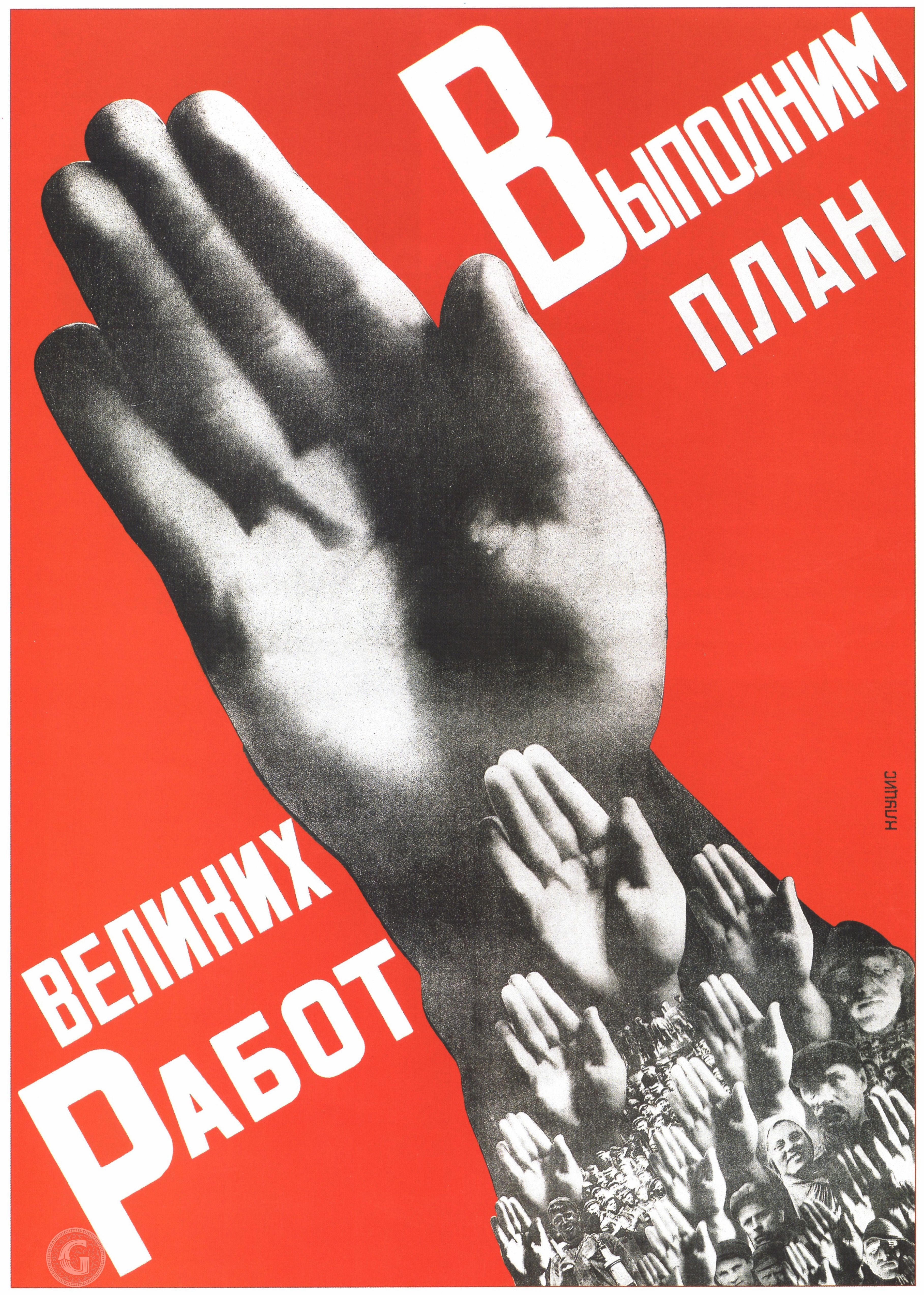 Gustav Klutsis - "Let's Fulfill the Plan of Great Works", 1930
3. Type as a visual element
Alexander Rodchenko and El Lissitzky treated letters as shapes — objects to be rotated, scaled, fragmented, and composed the same way geometric forms were arranged. A single word could be a complete composition. A letter could function as both image and text simultaneously.
This approach dissolved the traditional boundary between typography and graphic design. Type wasn't placed after the visual was built — it was part of building it from the start. This thinking is everywhere in contemporary poster design and brand identity — especially when designers present their work using professional poster mockups and templates to visualize layouts in real-world contexts.
Many principles of Soviet graphic design history continue to influence how designers structure modern compositions today.
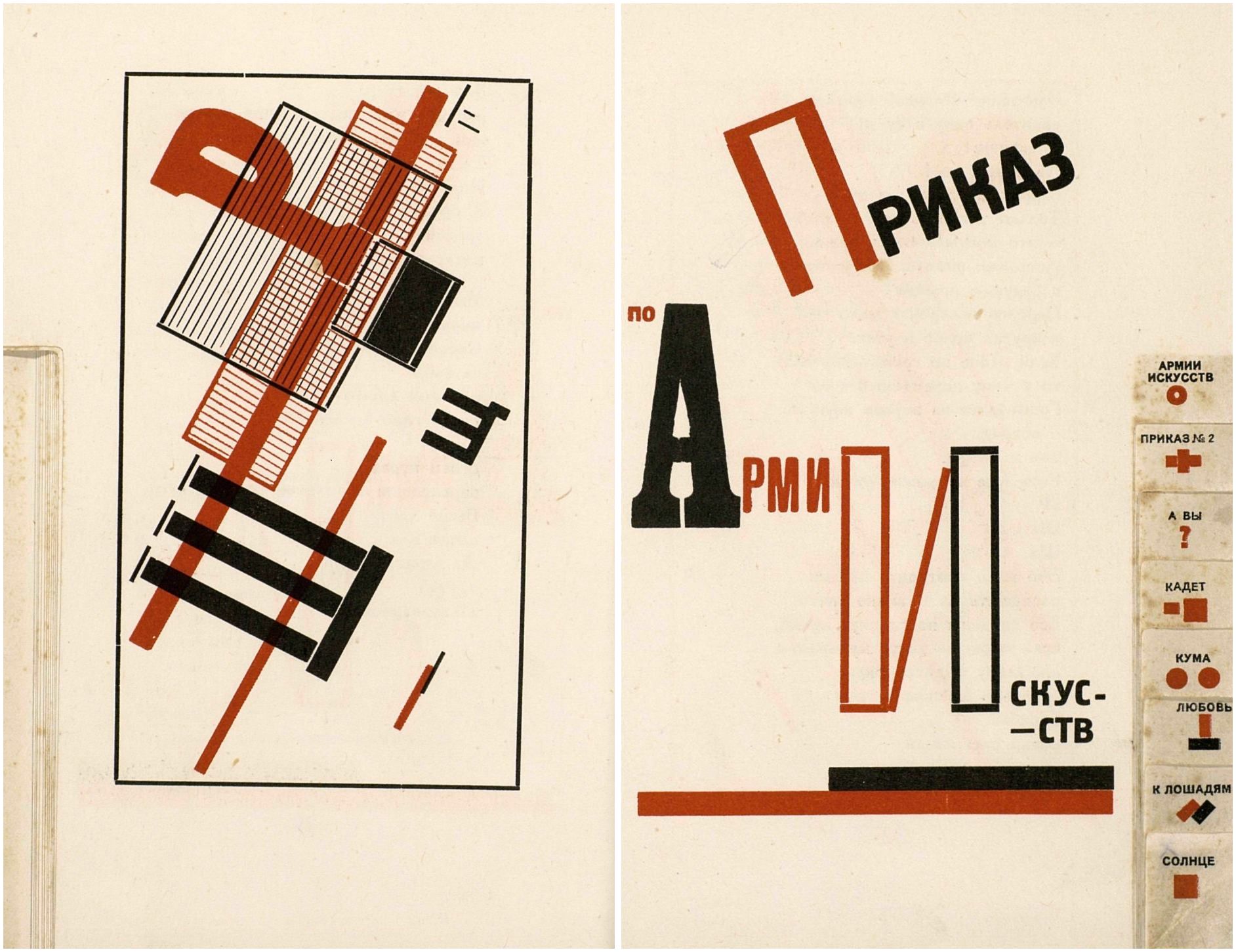 El Lissitzky - "For the Voice" (cover), 1923
4. The single focal point
Soviet designers almost always had one dominant visual element — a face, a fist, a machine, a figure pointing forward. Everything else in the composition existed to direct attention toward that one thing. Secondary elements framed it, led toward it, or contrasted against it. There was no visual ambiguity about where to look first.
This wasn't a stylistic choice — it was a communication strategy. A poster seen for two seconds on a street wall had to deliver its message immediately. Visual competition between elements meant the message was lost.
In UX and web design, this became the principle of visual hierarchy. One primary action, one primary message per screen. Supporting elements guide the eye rather than compete for it. The vocabulary is different — conversion, hierarchy, attention — but the underlying logic comes from the same place.
Exploring Soviet posters today helps designers better understand how visual hierarchy evolved.
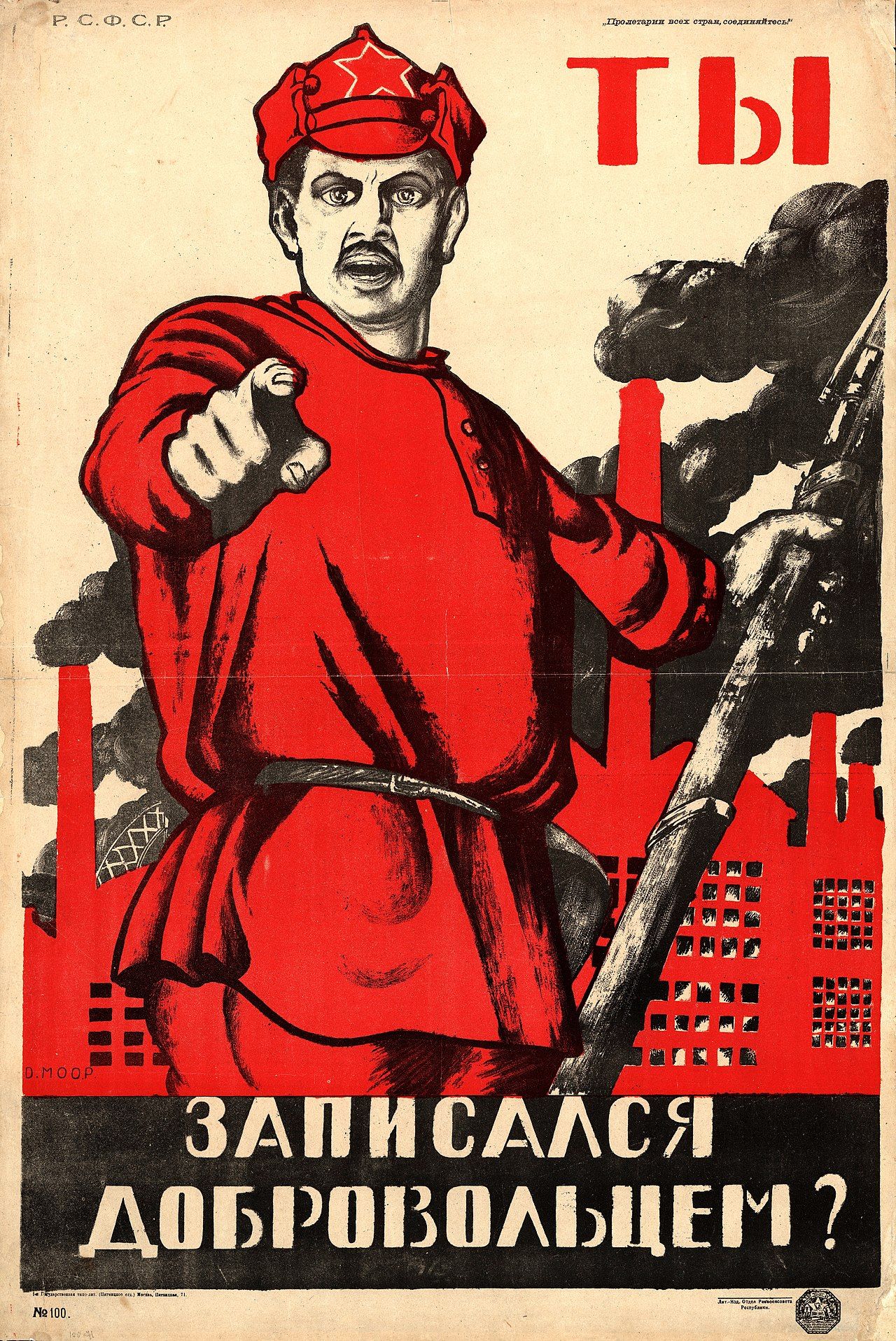 D. Moor - "Have you volunteered?", 1920
5. Geometric simplification of the human figure
Constructivist designers reduced human figures to basic geometric shapes — circles for heads, rectangles for torsos, simplified limbs reduced to clean lines and angles. This wasn't a stylistic quirk or an artistic statement about abstraction. It was a practical solution. Simplified forms reproduced cleanly under high-contrast printing conditions, remained readable at large scale, and communicated posture, action, and emotion without photographic detail.
A figure built from geometry reads faster than a realistic illustration. The brain processes the shape before it processes the details. Contemporary illustration and icon design uses exactly this approach, from onboarding screens to pictograms.
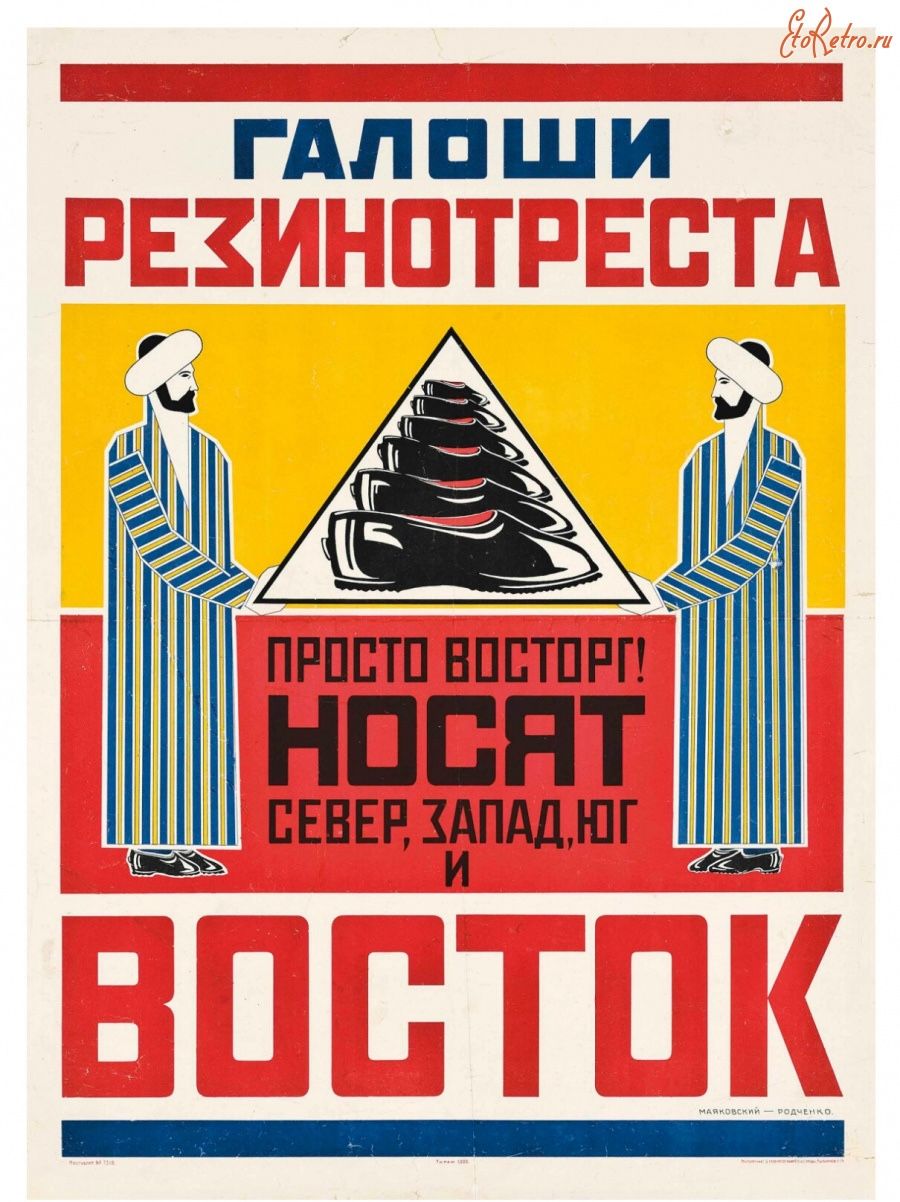 A. Rodchenko - advertisement for Rezinotrest, 1923
6. Red as a functional color, not a decorative one
Red wasn’t chosen for warmth or excitement — it had one job: to mark what mattered. Designers experimenting with layouts today can also try poster free mockups to test their color and composition choices before final production.
This functional use of a single accent color keeps compositions from becoming visually noisy. Every other color in the palette was relatively neutral. Red appeared precisely and sparingly, which made it powerful every time it appeared.
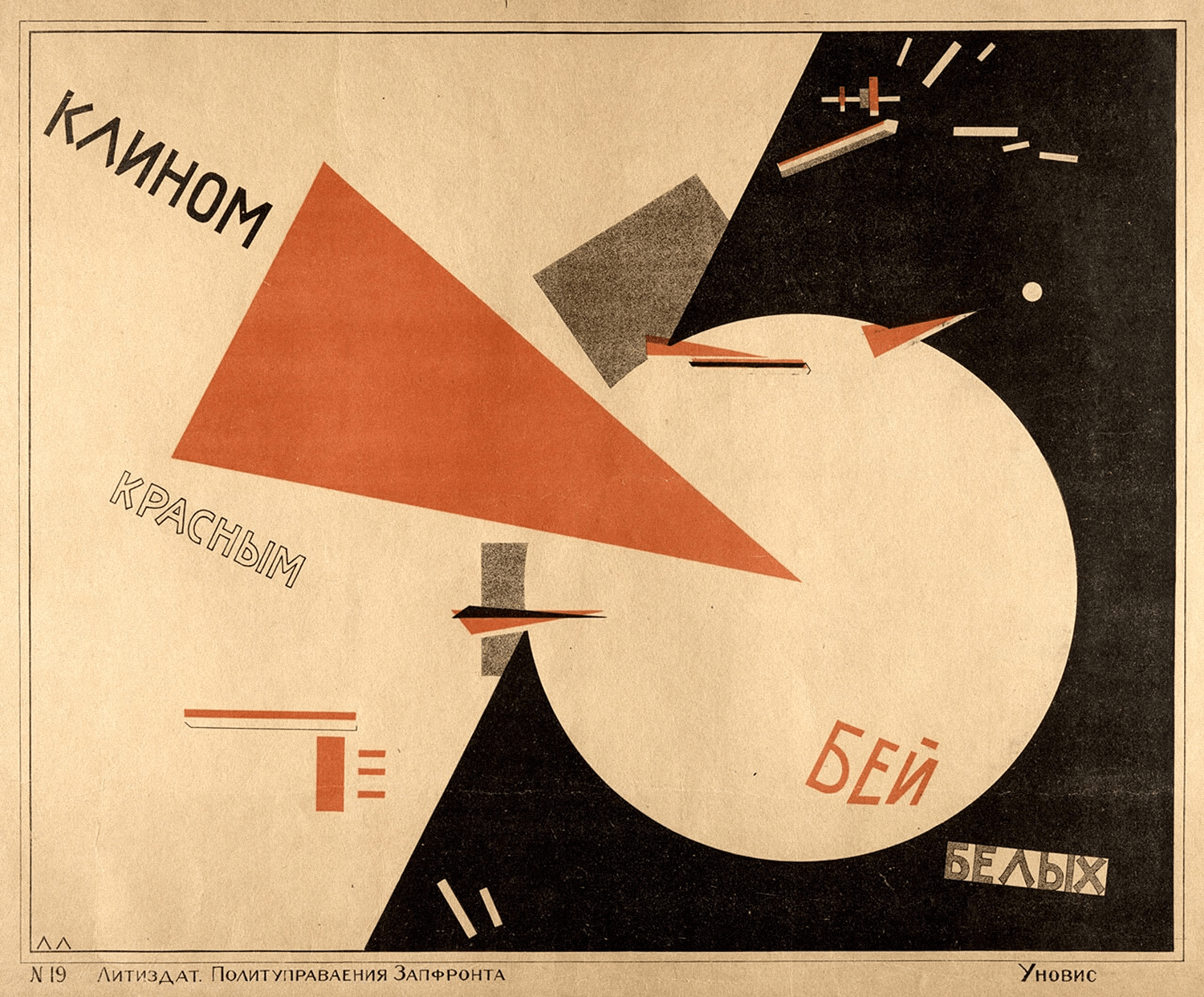 El Lissitzky — "Beat the Whites with the Red Wedge," 1919
7. Negative space as structure
Soviet constructivism treated empty space not as what remained after placing elements, but as something placed deliberately — an active structural component of the composition. White space wasn't breathing room left over at the edges. It was weighted, shaped, and positioned the same way a block of color or a typographic element was positioned.
This distinction matters more than it might seem. Empty space that is actively composed creates tension, balance, and direction. Empty space that simply remains after other decisions are made creates nothing — it's just absence. This is still one of the clearest dividing lines between competent graphic design and strong design — something that becomes especially visible when using a realistic poster mockup to evaluate spacing and composition in a real environment.
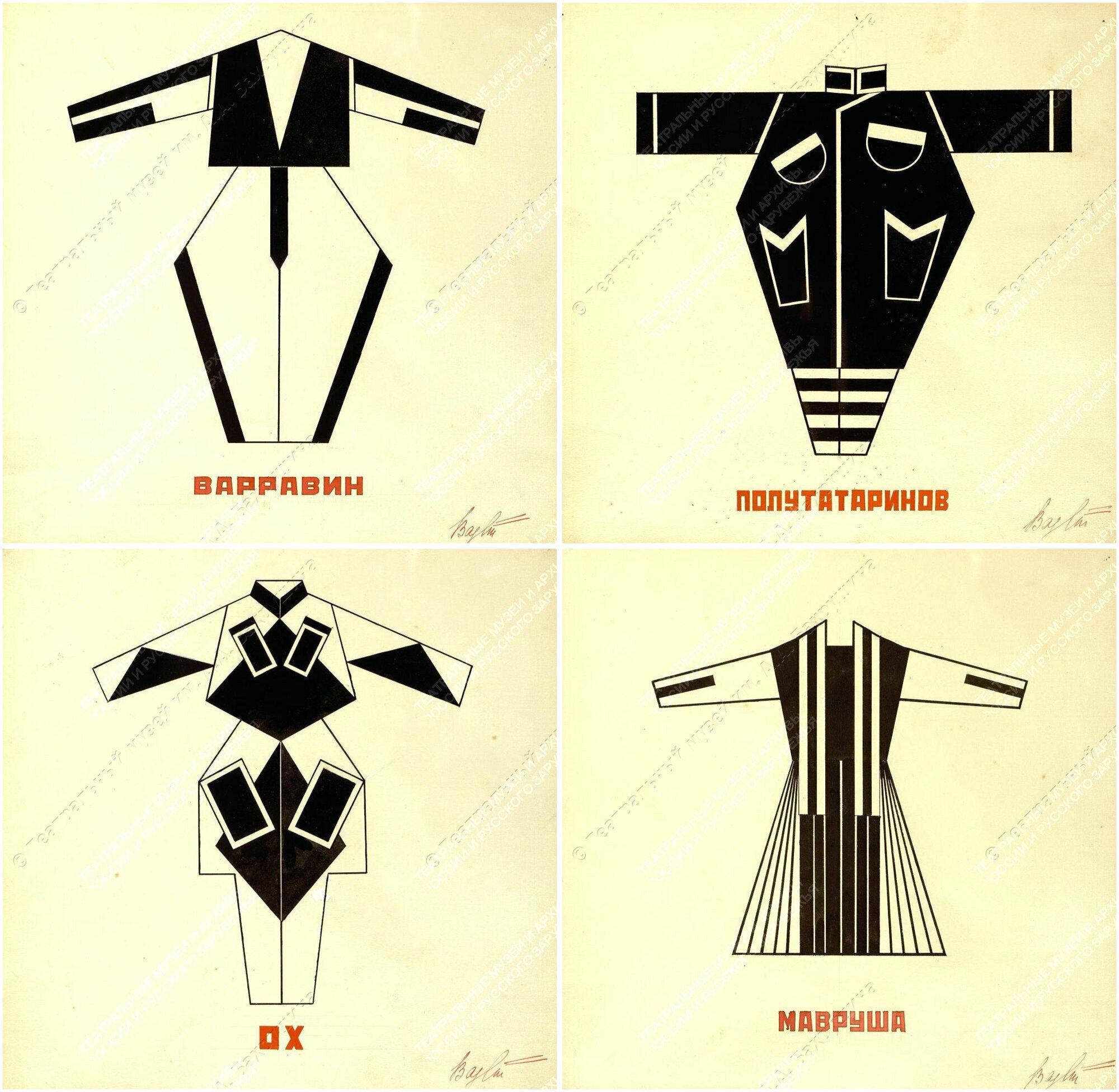 V. F. Stepanova — costume sketches for "The Death of Tarelkin", 1922
Conclusion
Soviet poster design wasn’t just a historical style — it was a system built on clarity, efficiency, and visual impact. These principles continue to shape modern graphic design, from branding to digital interfaces. Understanding how these techniques work gives designers a practical advantage: the ability to communicate faster, clearer, and more effectively. Whether you're creating posters, interfaces, or visual
identities, these ideas remain as relevant today as they were a century ago.
FAQ
Why is Soviet poster design still relevant today?
Because it focuses on clarity, hierarchy, and strong visual communication — principles that are essential in both print and digital design.
What defines constructivist posters?
Bold geometry, limited color palettes, dynamic composition, and typography used as a visual element rather than just text.
Can these techniques be used in modern design?
Yes. They are widely used in branding, UI/UX, and editorial design, often without designers even realizing their origin.