Why AI Mockups Can't Replace Professional Mockups
2026-03-13T10:05:54.366ZIn recent years, AI mockups have transformed the way designers and apparel brands visualize their products. Fast, automated, and scalable, AI-generated clothing images seem like the perfect solution for t-shirts, hoodies, and streetwear lines. However, when it comes to creating professional content for sales pages, ads, and lookbooks, AI still falls short. This article explores why professional mockups remain indispensable, and how free resources can complement your workflow.

Problem #1: Fabric Physics is Complex
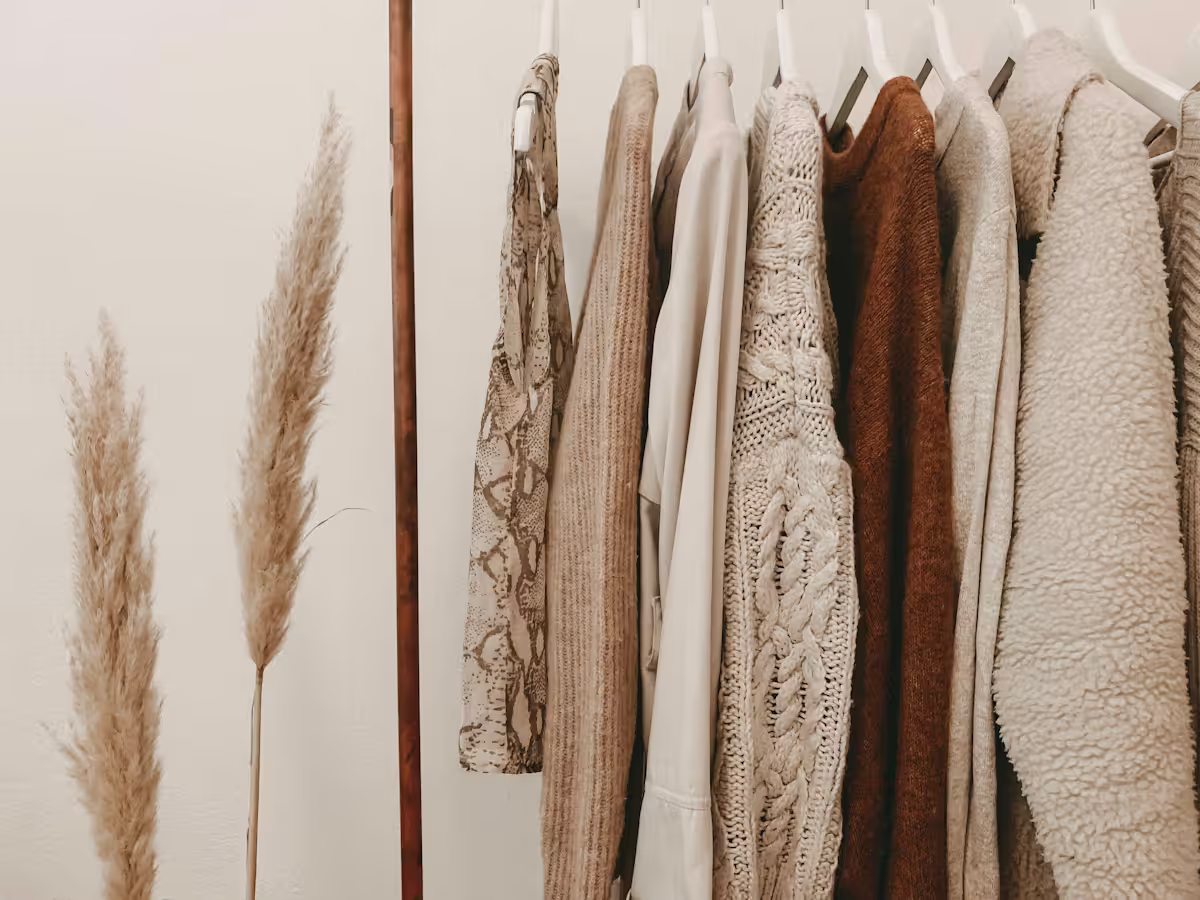
Apparel is fabric, and fabric behaves differently depending on material, cut, and weight. A cotton t-shirt drapes in one way, while a fleece hoodie has volume and density that cannot be replicated accurately by AI. A lightweight viscose blouse and heavy denim are worlds apart in behavior.
Professional apparel mockups are built from real photographs or precise 3D renders. Every fold, tension point, and stretch is calculated to replicate the true garment. AI generalizes from millions of images and outputs an “average” fabric, making it unreliable for representing specific products like a Gildan hoodie or Bella+Canvas t-shirt. Customers can immediately sense when a mockup looks unnatural, which affects purchase decisions.
Problem #2: Prints and Graphics Need Precision
The success of apparel often depends on prints. Logos, graphics, or text must appear exactly as they would on the final garment. AI can approximate, but letters may blur, lines curve, and graphics can warp unexpectedly.
Professional mockups utilize Smart Objects in PSD files, ensuring the design wraps perfectly around the garment. Every pixel is positioned correctly — an essential feature for brands where the print is central to the identity. Free apparel mockups still offer this precision, allowing reliable, high-quality visualization without errors.
Problem #3: Lighting and Material Realism
Lighting is critical in apparel visualization. It communicates texture, fabric weight, and overall quality. A professional apparel mockup captures light interacting with the garment, whether it’s the volume of a hoodie or the softness of a t-shirt. AI generates statistically “average” light that often flattens fabric textures and reduces realism.
Brands targeting specific audiences, like streetwear or children’s clothing, require lighting that complements their style. Only professional mockups, including t-shirt mockups and hoodie mockups, can provide such tailored presentation.
AI Mockups vs Professional Mockups
Let’s break down the differences:
- AI Mockups: Quick, scalable, good for internal drafts or concept checks. Unpredictable on fabric details, print accuracy, and lighting nuances.
- Professional Mockups: Built for realism and precision. Accurate fabric physics, pixel-perfect print placement, and custom lighting. Ideal for final images on Shopify, Etsy, ads, and lookbooks.
Even digital mockups created by professionals surpass AI outputs in both quality and reliability. For brands, this difference can translate into better sales and stronger customer trust.
Problem #4: Legal Clarity and Licensing
Most AI generators operate in a legal gray zone. Ownership, commercial usage rights, and source data are often unclear. Professional mockups come with explicit commercial licenses, ensuring your images can safely be used in ads, online stores, and client presentations.
Problem #5: Brand Language and Style
Every brand has a visual identity. Streetwear, kids’ clothing, and minimalist basics communicate through color, contrast, and composition. Professional clothing mockups allow you to control style, angle, and background to match your brand’s voice. AI applies the same approach for everyone, making images generic and less effective for marketing.
Where AI Works and Where It Doesn’t
AI mockups excel at quick iterations and testing concepts, but for real-world use in product listings, ad campaigns, and lookbooks, professional mockups — including free apparel mockups — are irreplaceable. They offer precision, predictability, and brand consistency.
What Professional Apparel Mockups Include
- Accurate fabric physics for t-shirts, hoodies, and jackets
- Pixel-perfect print placement through Smart Objects
- Lighting calibrated for apparel visualization
- Commercial license clarity
- Multiple angles and detail shots
- Consistent quality with no AI artifacts
Frequently Asked Questions
Why do my apparel mockups look fake?
Common reasons include prints not conforming to folds, mismatched lighting, or low-resolution designs. Professional mockups solve these problems with Smart Objects, pre-baked lighting, and high-res files.
AI mockup vs professional mockup — what's the real difference?
AI mockups are statistical approximations, lacking control over fabric, print, and layers. Professional mockups provide predictable, editable PSD files that maintain quality across collections and projects.
Where can I find free professional apparel mockups?
Platforms like ls.graphics offer high-quality free apparel mockups suitable for commercial use, including t-shirt mockups, hoodie mockups, and general clothing mockups.
Conclusion: Why Professional Mockups Matter
AI mockups are useful for drafts and quick tests, but they cannot replace the precision and realism of professional mockups. For serious apparel brands, investing in professional mockups ensures accurate representation, consistent quality, and effective marketing images. Using a mix of free resources and paid professional templates can maximize efficiency without sacrificing quality.