Why AI Apparel Mockups Can't Replace Professional Apparel Mockups
2026-03-13T10:05:54.366ZAI can generate clothing visuals in seconds. But when it comes to a real apparel business — t-shirts, hoodies, streetwear — the gap between AI and a professional mockup is impossible to ignore.
When AI mockup generators first appeared, many apparel designers and print-on-demand entrepreneurs had the same reaction: this is the future. Upload your design, get a ready-made t-shirt mockup. Fast, free, no Photoshop needed. For print on demand sellers especially, the promise was huge — no photoshoots, no costs, infinite scale. A few years later, the picture is much clearer: for the apparel niche, AI doesn't work nearly as smoothly as the hype promised. And free apparel mockups made by professionals still win on quality every time. Here's why.

Problem #1: AI Doesn't Understand Fabric Physics
Apparel is, above all, fabric. And fabric is one of the most complex objects to visualize accurately. Every material has its own weight, density, and elasticity. A cotton t-shirt drapes differently than a fleece hoodie. A lightweight viscose blouse behaves nothing like heavy denim. Every garment has its own physics.
A professional apparel mockup is built from real photographs of the actual garment or a precise 3D render where every fold and tension point is calculated down to the last detail. AI generalizes: it has seen millions of clothing photos and outputs an "average" fabric. When you need a mockup of a specific Gildan hoodie or t-shirt mockup templates for Bella+Canvas — AI simply doesn't know how that specific material behaves on that specific cut.
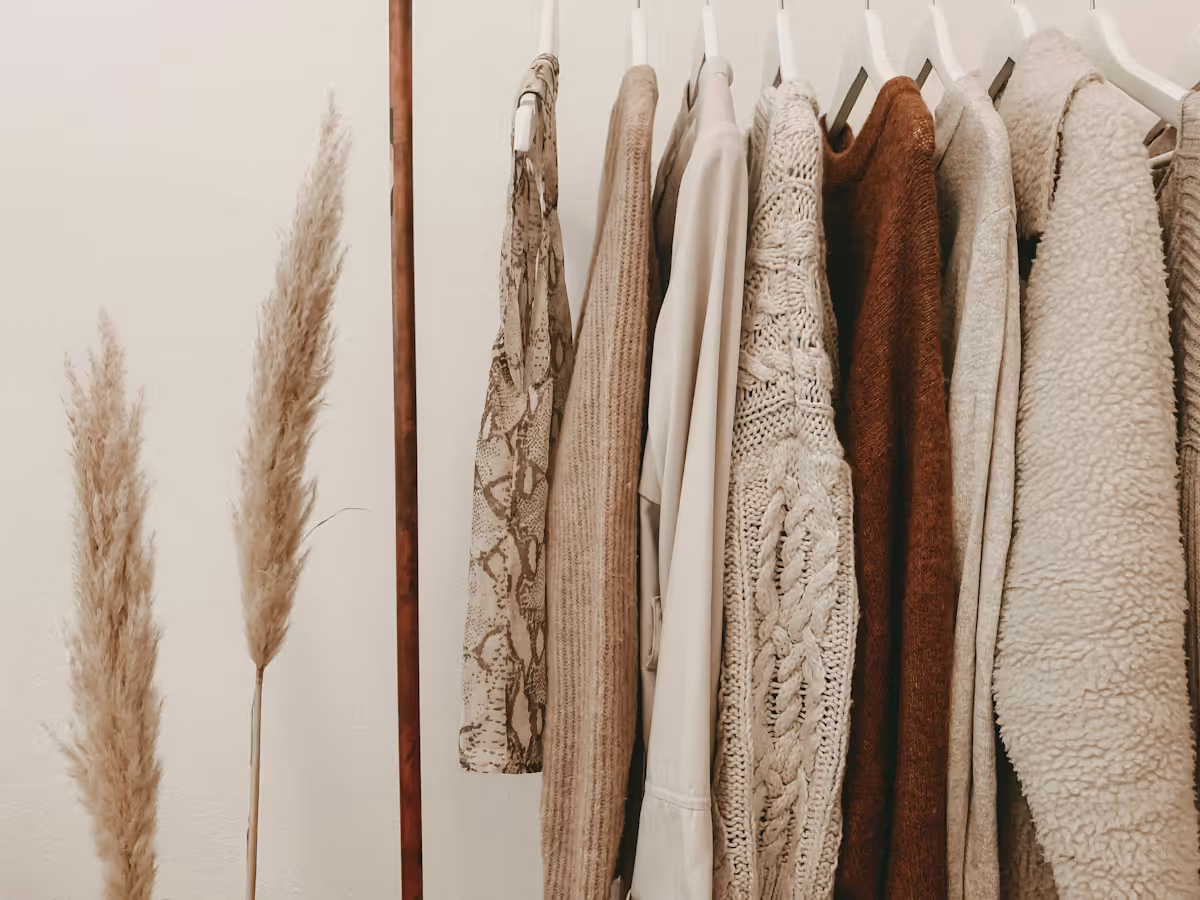
A customer browsing hoodies or t-shirts makes a decision in seconds. If the mockup looks plasticky or fake — they close the tab. They'll never know how good the design actually was.
Problem #2: Prints on Clothing Are AI's Weak Spot
The apparel business runs on prints. A brand logo on the chest, a graphic on the back, text on a sleeve — that's what sells the piece. Any clothing mockup needs to show that print exactly as it will appear on the finished garment. Try feeding an AI generator a t-shirt with a precise geometric print or a complex logo. Best case: the result is passable. Worst case: letters blur, lines curve, and your brand mark turns into something abstract.
A professional apparel PSD mockup uses a Smart Object: the print is literally embedded into the layer and warps precisely along the garment's shape through a mathematically exact mask. Every pixel of your logo sits exactly where it should. AI interprets the design — and interpretation always introduces error. For apparel brands where the print is the identity, that error is unacceptable.
AI vs Professional Apparel Mockup
AI Apparel Mockup
Fast, cheap, scalable. Good for drafts and concept tests. Unpredictable on fabric details and prints — especially for specific garments.
Professional Apparel Mockup
Accurate cut, true fabric physics, pixel-perfect print placement. Built for final content, sales pages, and brand presentations.
Problem #3: Lighting Apparel Is a Craft of Its Own
Apparel photography and apparel mockups are a specialized discipline. Light needs to do more than illuminate — it needs to communicate material: show that the t-shirt is soft, that a hoodie mockup PSD captures the volume and density of fleece, that the fabric breathes. A professional apparel mockup is built with a deep understanding of how studio light interacts with a specific garment type — where the key light falls, how the volume of the piece is modeled, where shadows should sit on the sleeves and collar.
AI averages the lighting for clothing just like it averages everything else. It produces statistically "normal" light for a generic t-shirt. But a professional apparel mockup is built for a specific purpose: this streetwear brand needs sharp contrast and dark tones, while this kids' line needs softness and warmth. AI doesn't know your brand. It only knows "clothing in general."
Problem #4: Licensing for Apparel Content Is a Serious Issue
The apparel business is built on sales. Your mockups go into ads, product pages, and catalogs. That's exactly where the legal clarity of your images becomes critical. Most AI mockup generators operate in a gray zone: it's unclear what data they were trained on, who owns the generated images, and whether they can legally be used in commercial advertising.
Professional apparel mockups come with an explicit commercial license. You know exactly what you can do with the file: run Facebook and Instagram ads, list on Etsy and Shopify, use in client presentations. No legal surprises — which matters especially for brands that are scaling.
Problem #5: Every Apparel Brand Has Its Own Visual Language
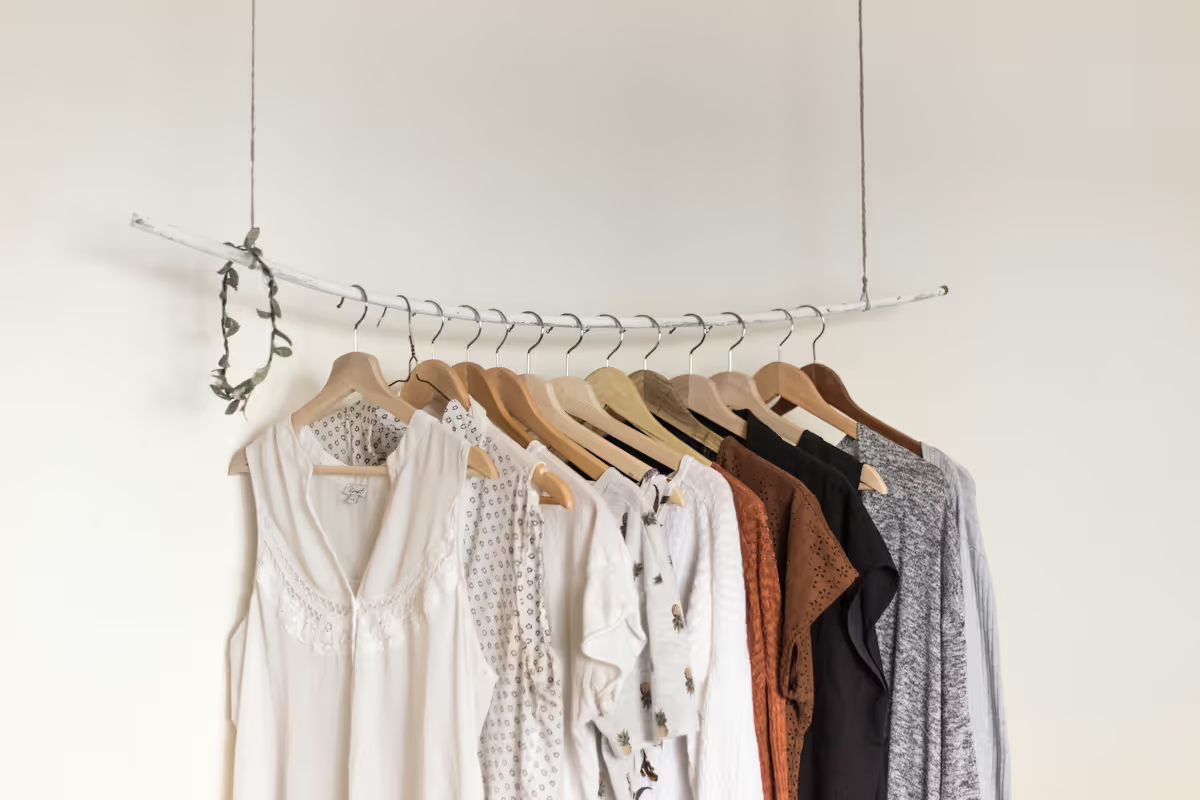
Every apparel brand speaks its own visual language. Streetwear talks in sharp contrasts and dark backgrounds. A kids' line speaks in soft pastels and warm light. A minimalist basics brand communicates through clean space and simplicity. Professional apparel mockups are built with these nuances in mind: you choose the style, background, and angle — and get an image that speaks your brand's language.
AI generates the same way for everyone. It doesn't know that your brand is positioned as premium casual rather than fast fashion. It doesn't understand the difference between a lookbook and a marketplace product card. A professional apparel mockup is a tool with character. AI is a tool without one.
For Apparel: Where AI Works and Where It Doesn't.
AI mockups are great for quick concept checks and draft presentations. But for a real apparel business — product listings on Etsy and Shopify, ad campaigns, lookbooks — you need professional apparel mockups. They're the ones that deliver accurate fabric physics, a perfect print, and the visual language your brand deserves.
What a Real Professional Apparel Mockup Looks Like Inside

Open a professional apparel mockup PSD file and the difference is immediate. A dedicated layer for the garment itself, separate groups for shadows and highlights, a Smart Object locked to the exact print zone — front, back, sleeve. Everything is labeled, everything is in its place. You swap the print in 30 seconds and get a predictable result that looks like a real photo shoot.
- Accurate fabric physics for specific garments — t-shirts, hoodies, jackets
- Pixel-perfect print placement through Smart Object
- Lighting calibrated specifically for apparel visualization
- Clean commercial license for advertising and sales
- Multiple angles of the same garment — front, back, detail shots
- Consistent quality across files with no AI artifacts
AI doesn't work with layers. It generates a flat image of clothing — and what's inside is completely inaccessible to you. If the print landed crooked or the shadow fell wrong, you can't fix it surgically. You just generate again and hope for better. For an apparel business that needs dozens of mockups for a single collection, that's simply not workable.
Frequently Asked Questions
Why do my apparel mockups look fake?
There are usually a few reasons: the design is placed "on top" of the fabric without warping to follow the folds, the lighting on the print doesn't match the lighting on the garment, or the design resolution is too low for the mockup size. Professional apparel mockups solve all three at once: Smart Object wraps the print accurately to the fabric geometry, lighting is already baked into the template, and files come in high resolution.
AI mockup vs professional mockup — what's the real difference?
An AI mockup generates a clothing image statistically — based on millions of training examples. It doesn't know the physics of a specific fabric, can't guarantee print accuracy, and gives you no access to layers. A professional apparel mockup is a PSD file with organized layers, a Smart Object for your print, and carefully crafted lighting. The result is predictable, editable, and repeatable. For final content and sales, professional is the only real option.
Best apparel mockup templates for Etsy — what should I use?
For Etsy, you need two key types: flat lay for product listing images (clean background, precise print) and lifestyle on-model for your main listing photo. Look for templates with at least 3000px resolution, Smart Object support, and a commercial license. A great starting point is the t-shirt mockup templates at ls.graphics — professional quality, multiple angles, and free options with commercial use included.
Free PSD apparel mockups with commercial license — where to find them?
Most free mockups online either require attribution or prohibit commercial use entirely. ls.graphics offers free apparel mockups with an explicit commercial license — you can use them in ads, on Etsy, Shopify, and in client projects without any restrictions. Download and use immediately.
Conclusion: Apparel Needs an Apparel Tool
AI mockups have changed the industry — that's a fact. But in the apparel niche, they occupy a very specific place: drafts, quick tests, stories content. Where results actually matter — product listings, ads, lookbooks, collection presentations — professional apparel mockups remain unmatched.
If you're serious about clothing, take a look at ls.graphics. Their full collection of apparel mockups is built specifically to make your clothing look like the real thing: ultra-realistic fabric visualization, accurate fold detail, flawlessly organized layers, multiple angles and color variants — with a portion of the collection completely free for commercial use.
Use AI where "good enough" is enough. Use ls.graphics where it needs to be perfect.