Brutalism on the Web — Examples That Work
Most design trends live and die by the rule of "invisible polish." Web brutalism does the exact opposite — it shows you the bones, the borders, the raw grid. And it works. Not despite the ugliness, but because of it. Brutalism in web design has become one of the most talked-about aesthetic movements of the last decade, and for good reason.
"In its ruggedness and lack of concern to look comfortable or easy, brutalism can be seen as a reaction by a younger generation to the lightness, optimism, and frivolity of today's web design." — Pascal Deville, founder of Brutalist Websites
Brutalism started in architecture during the 1950s: exposed concrete, heavy masses, no apologies. On the web, it arrived as a reaction to the decade of rounded corners, soft drop shadows, and pastel gradients that had made every SaaS landing page look like its cousin. Brutalist web design said: enough. Here is the structure. Deal with it.
What actually makes brutalist UI work?
Here's the thing — most brutalist websites that fail don't fail because they're too raw. They fail because raw wasn't the intention. Real web brutalism is intentional chaos. Every misaligned element, every screaming font, every flat black border is a deliberate choice. The grid is broken on purpose. The negative space screams. The hierarchy exists, it just refuses to hold your hand.
A few defining traits of brutalism in web design that actually converts:
- Typography that takes no prisoners — giant, weighted, often monospaced.
- Flat, high-contrast color palettes — black, white, maybe one violent accent.
- Raw HTML aesthetics — visible structure, underlined links, no visual noise beyond the content itself.
- Deliberate asymmetry — layouts that feel accidental but are carefully composed.
Brutalist website examples that get it right
The best brutalist website examples share one quality: every uncomfortable choice was made on purpose. Here are eight sites that prove web brutalism isn't just a trend — it's a design philosophy.
Bloomberg Businessweek
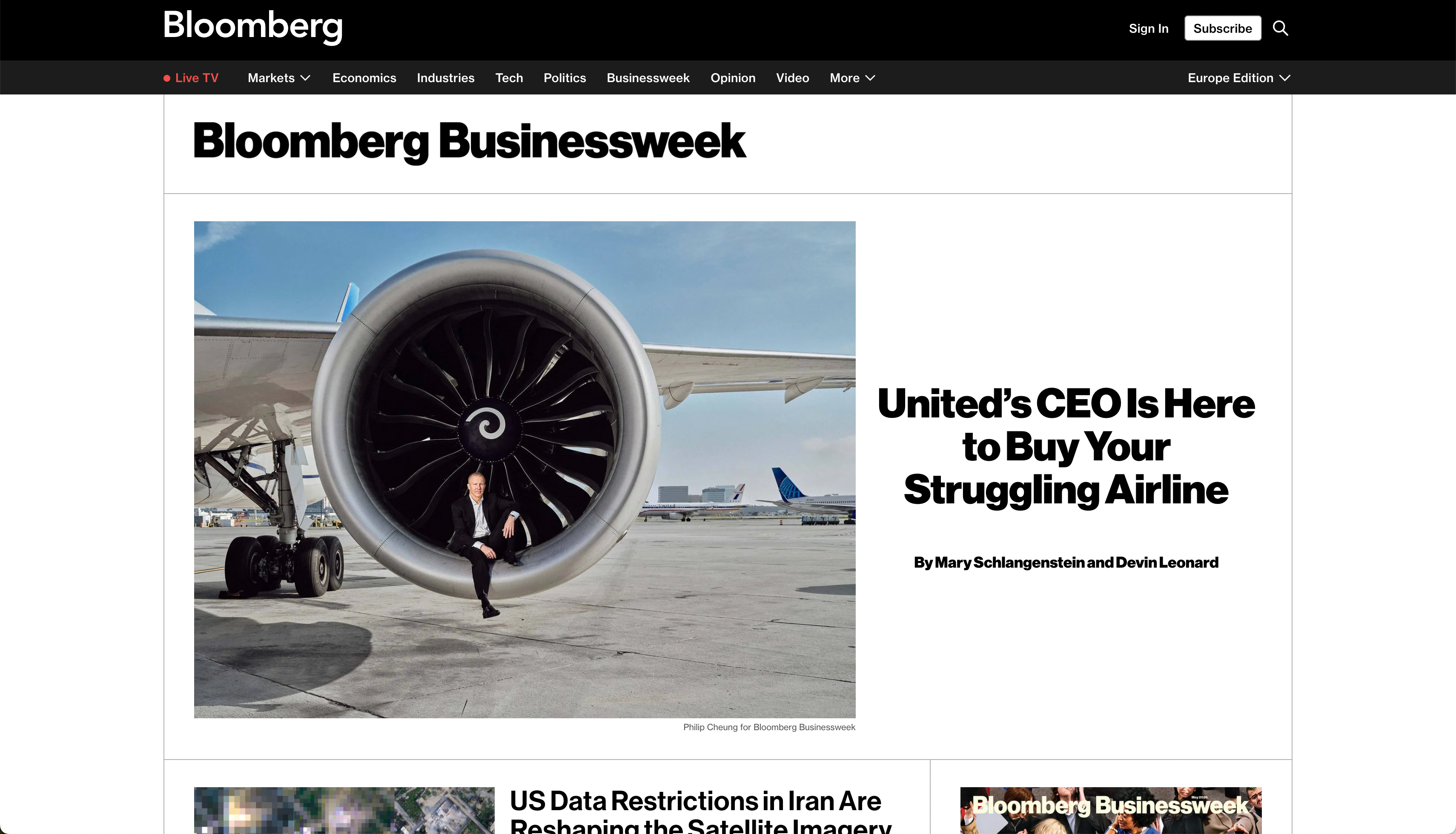
Bold editorial layouts, oversized type, images bleeding to every edge. Every issue feels like a punch to the face — in the best way. Bloomberg Businessweek is one of the clearest examples of brutalism applied at media scale: the design is the attitude.
Balenciaga.com
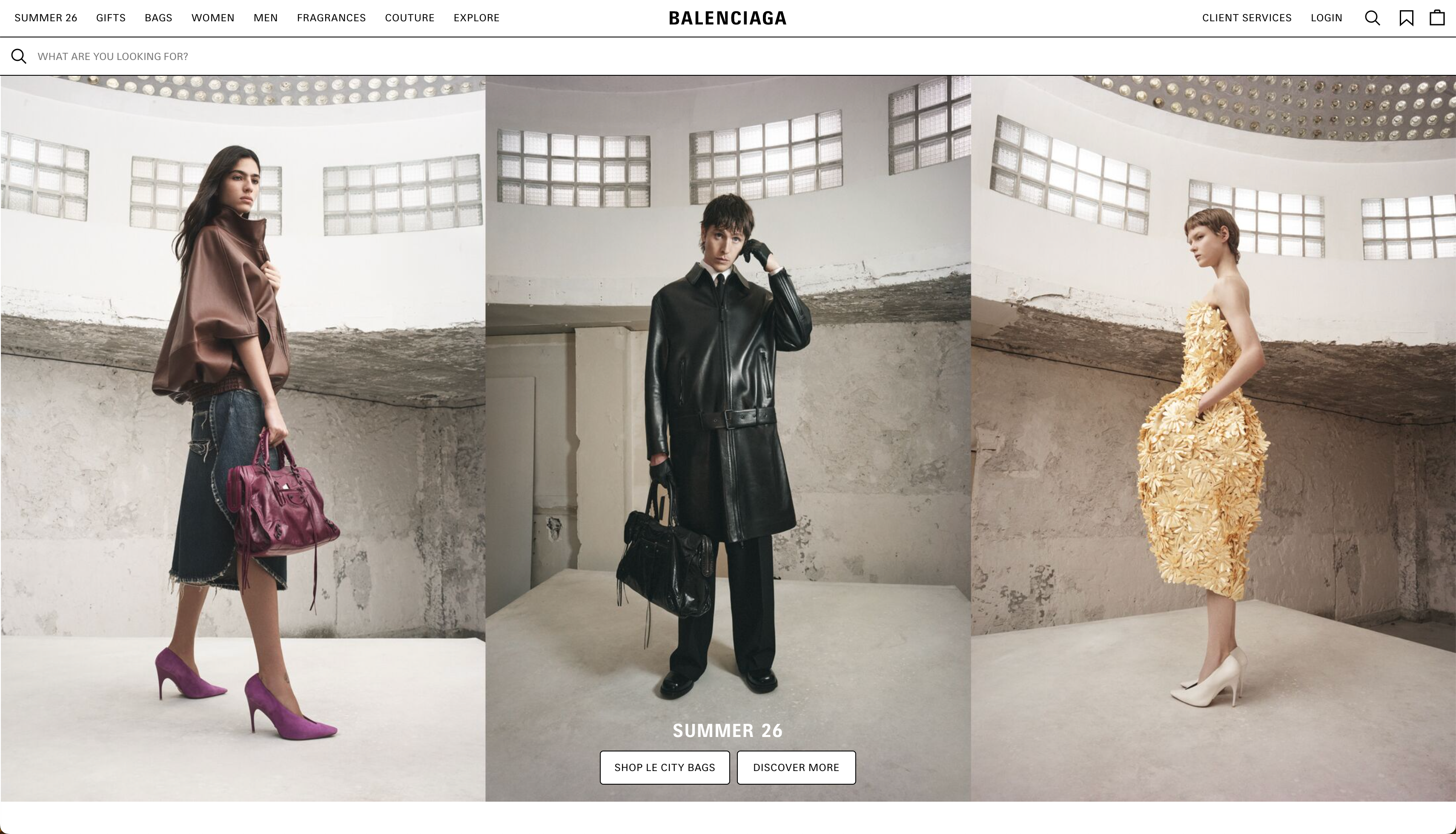
A luxury brand weaponizing web brutalism. Monospace fonts, hard edges, total silence between elements. The contrast with the price tags is the whole joke — and it works brilliantly. Balenciaga proves that brutalist UI and high fashion aren't opposites.
RAW Magazine
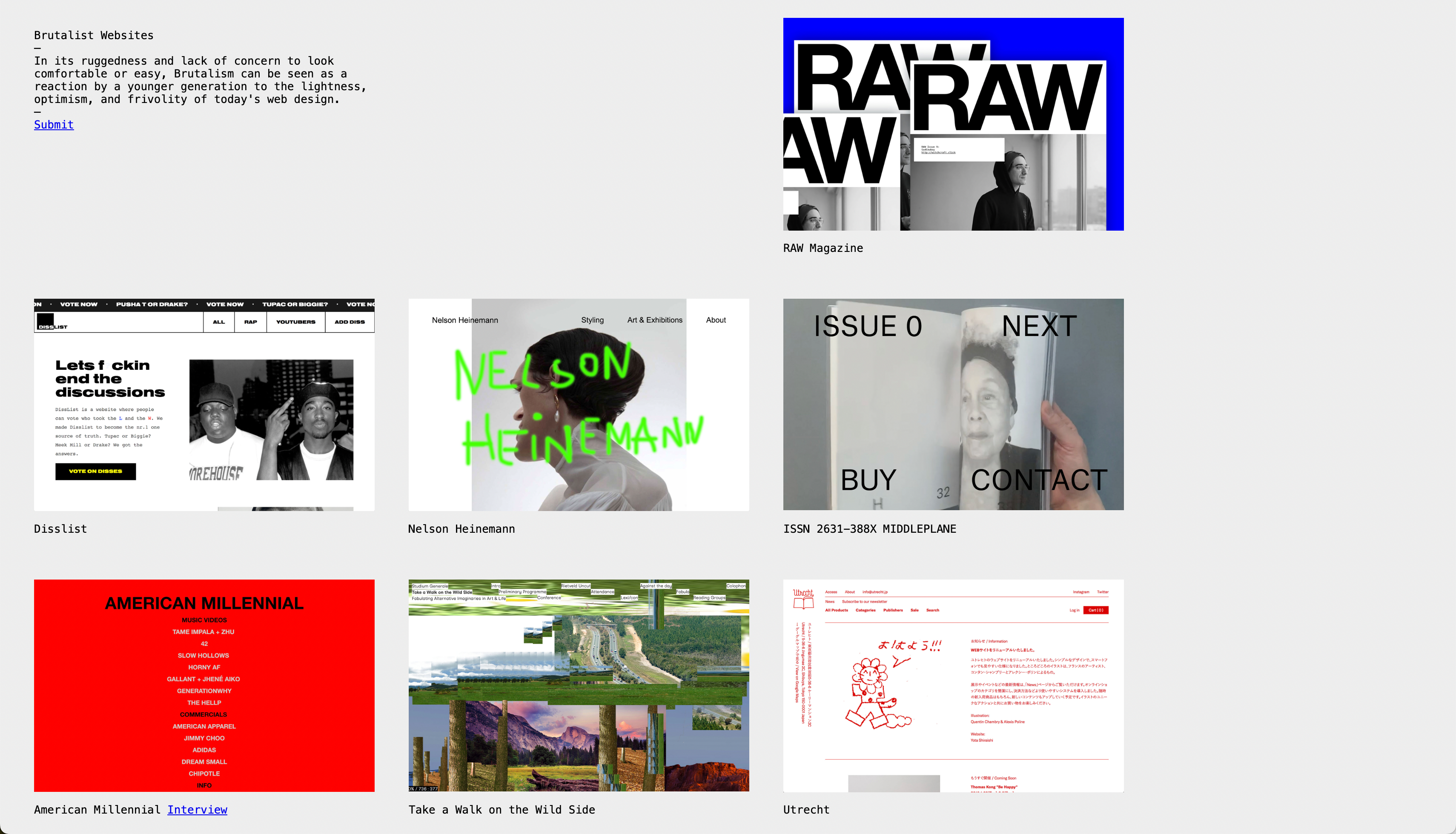
An independent magazine wearing its rawness like a badge. Unforgiving grid, blunt typography — editorial voice taken to its logical extreme. One of the purest brutalist website examples in independent publishing.
Are.na
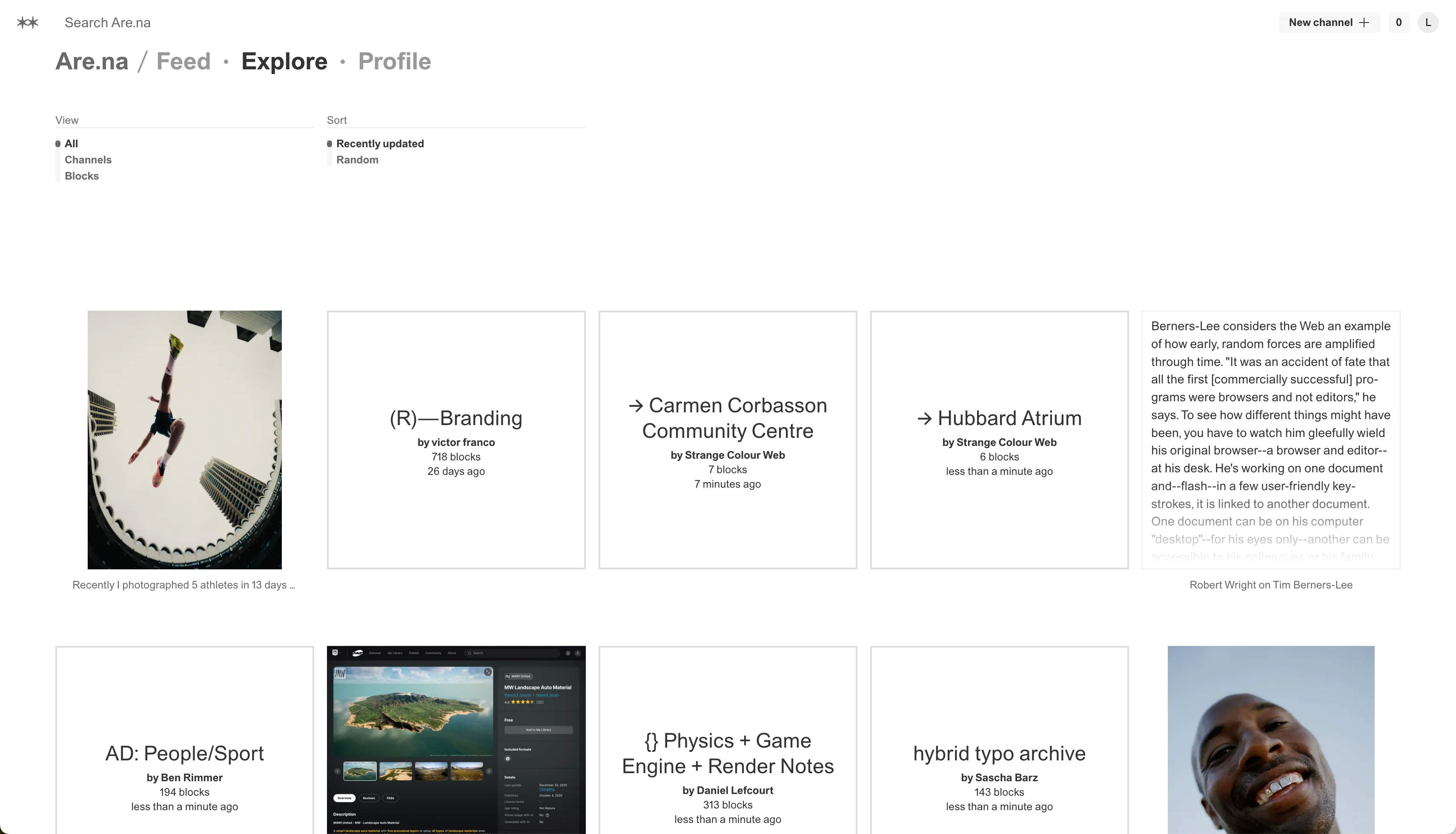
A research and moodboard platform with a deliberately bare interface. The structure of the data is the visual language — nothing decorates what doesn't need decorating. Are.na is what brutalism in web design looks like when function genuinely comes first.
Studio Brot
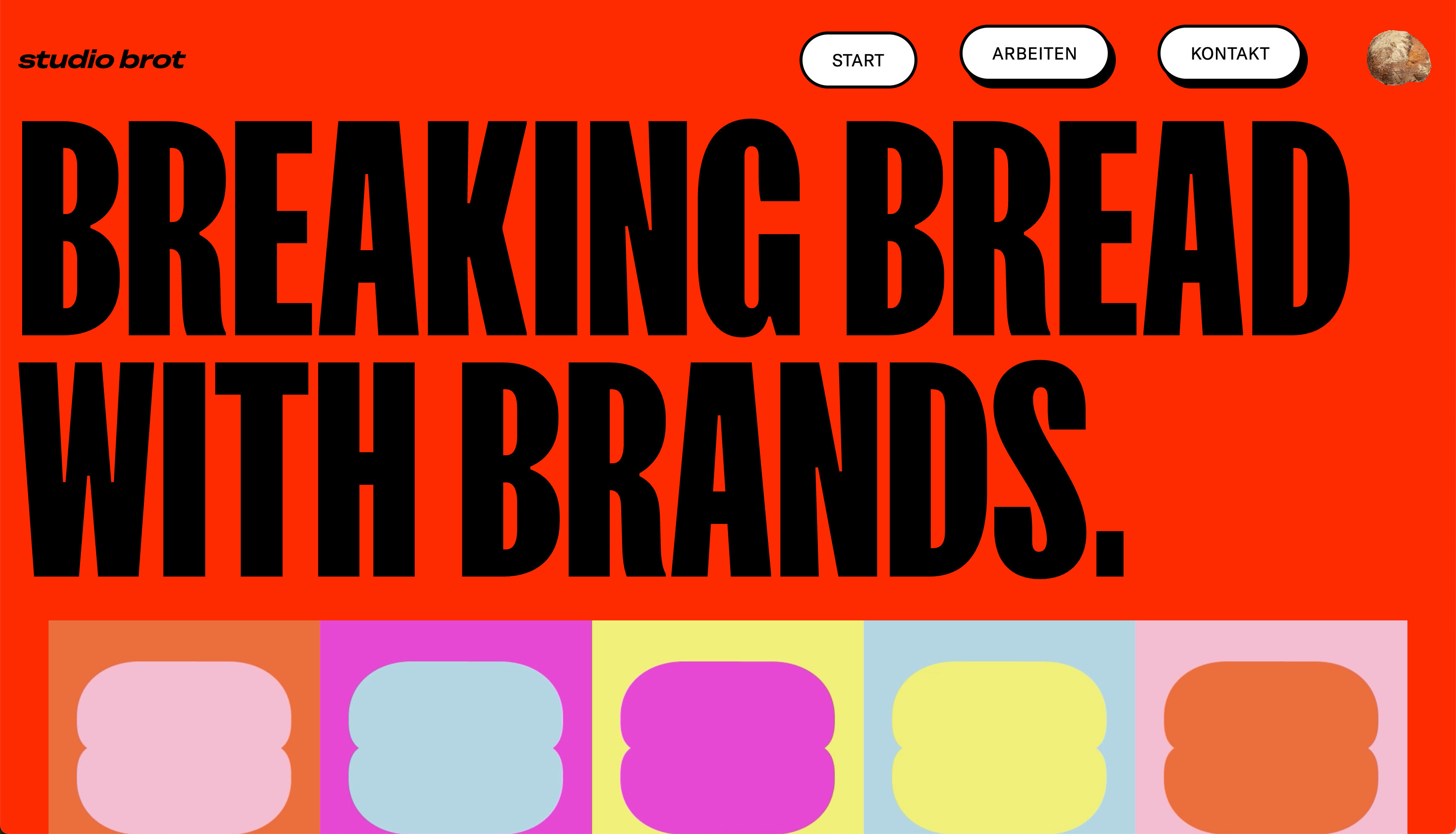
A German creative agency blending minimalist construction with unexpected cursor effects and motion. Raw and unpolished — and deeply, deliberately engaging. Studio Brot's site shows that brutalist UI can carry personality without softening its edges.
"It's not perfect, it's us." — Studio Brot
Warsaw MoMA — Department of Presence
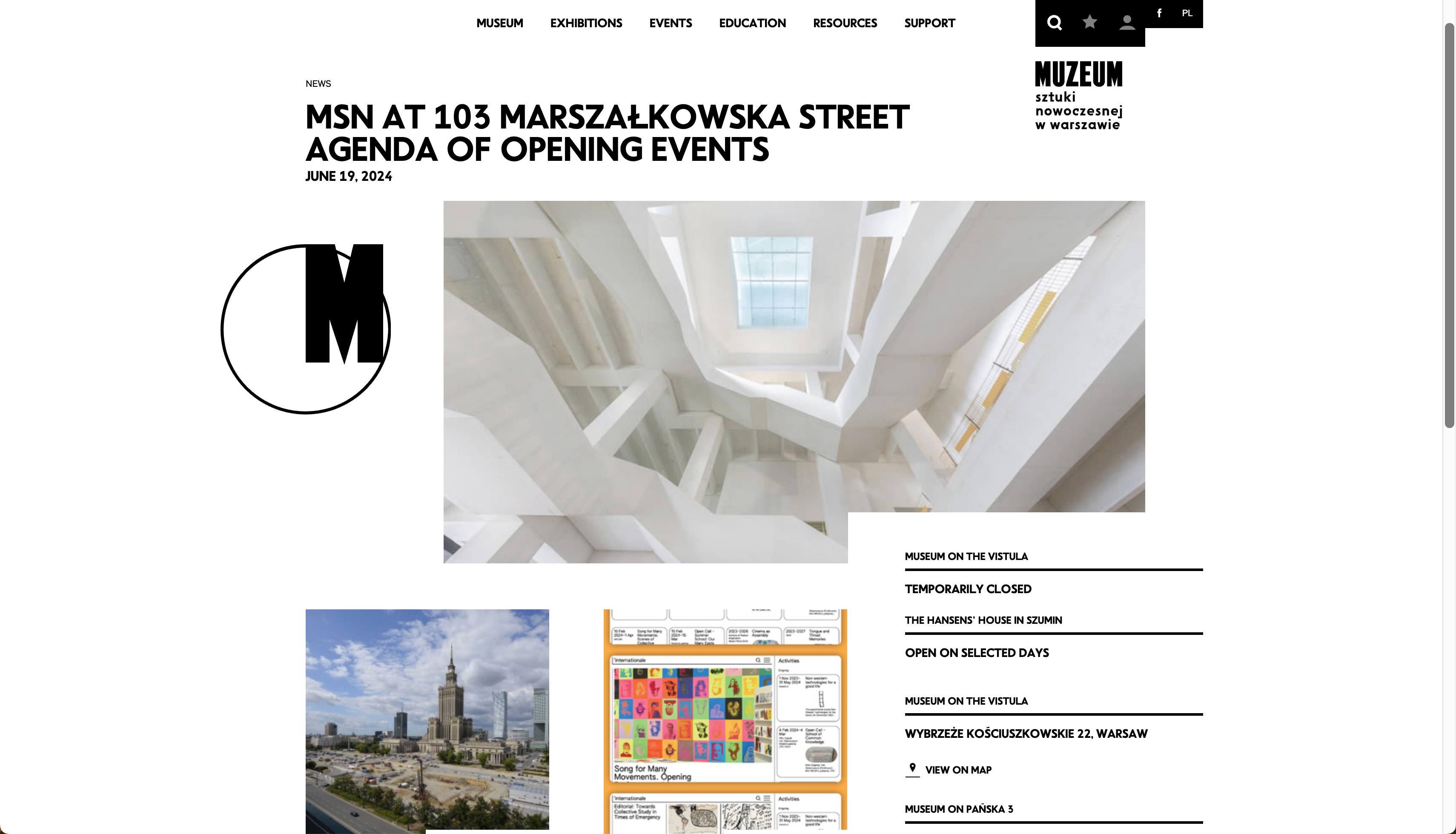
Huge interactive cement blocks you can drag across the screen in any direction. Brutalism as a physical experience — structure you can actually push around. An experimental research platform that makes web brutalism feel genuinely spatial.
Dublab
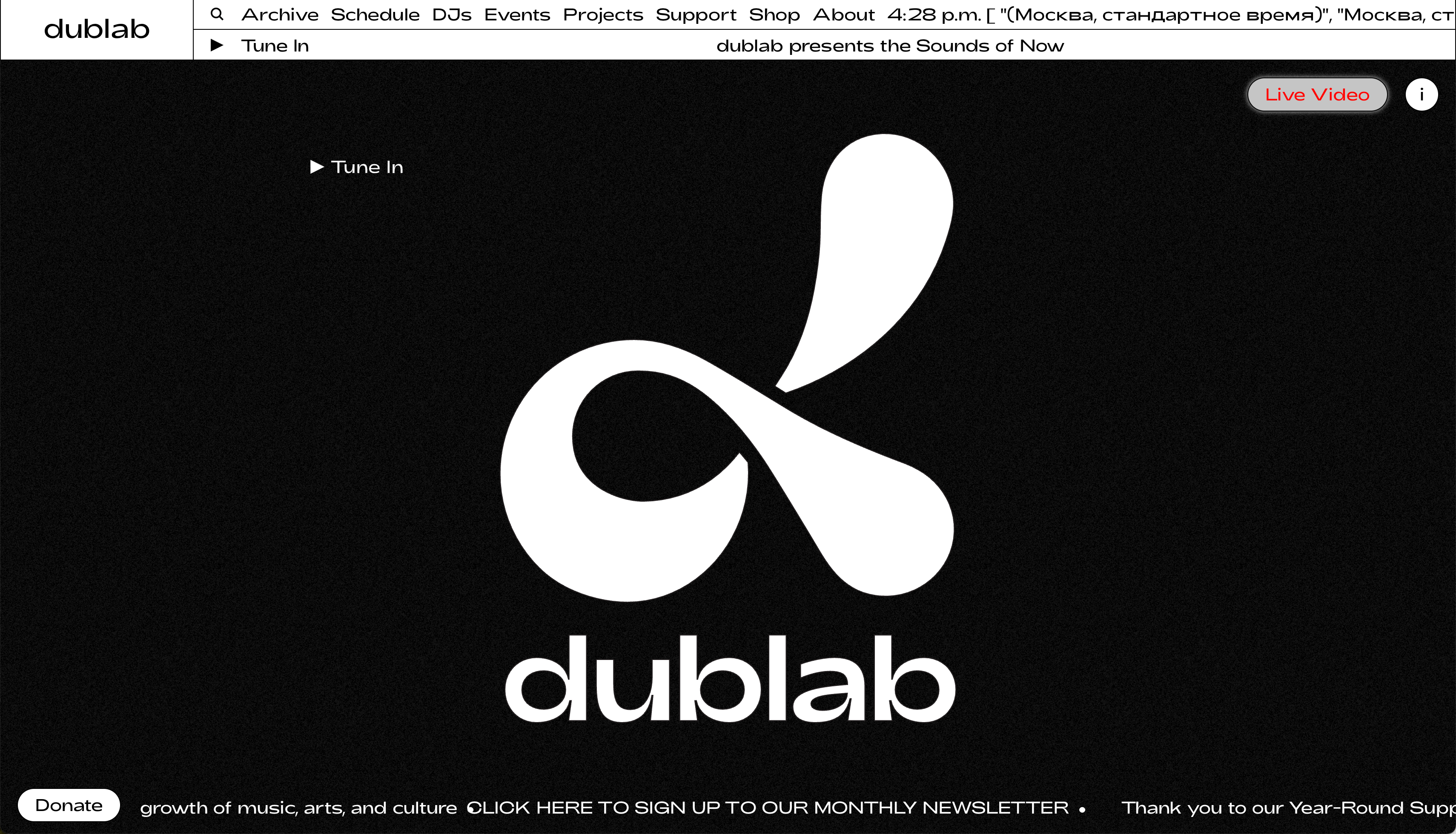
A non-profit radio station with blue hyperlinks on hover, flat old-school transitions, and zero decoration. Brutalism through absolute loyalty to content. Dublab is proof that the oldest patterns of the web are still the most honest.
Bergen Assembly
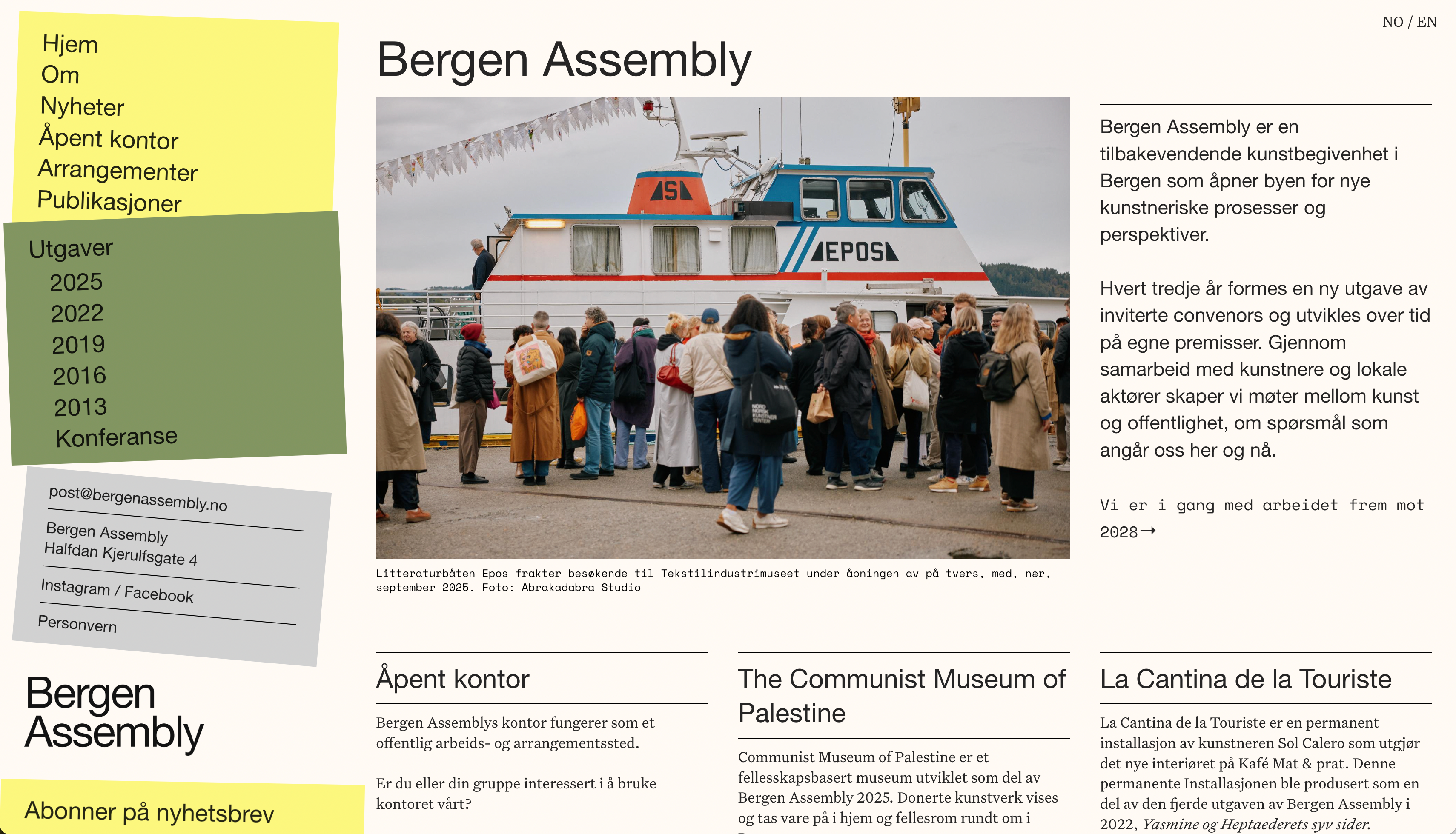
A Norwegian art triennial with a site as uncompromising as the art it presents. Dense, flat, typographically aggressive — culture that refuses to be smoothed over. One of the strongest brutalist website examples from the world of contemporary art institutions.
What all of these brutalist websites have in common: they use web brutalism as a voice, not a shortcut. The rawness is the personality. The friction is the brand.
Brutalist UI in mockups and prototyping
If you're designing a brutalist UI — or any high-contrast, detail-dependent interface — the gap between your Figma file and a real-world presentation can quietly kill the impact. A brutalist web design with hard black borders lands very differently on a device frame than in an artboard. The rawness that works on screen can look clumsy when dropped into a generic phone template.
That's exactly where the Mockup Plugin for Figma earns its place in the brutalist designer's toolkit. Devices mockups, print mockups, warp and distort transformations — it lets you drop your hard-edged, high-contrast brutalist UI onto real surfaces without softening a single pixel. Brutal in Figma, brutal in the mockup. The raw aesthetic stays intact all the way to the client presentation.
This matters more than it sounds. Brutalist website design is particularly sensitive to rendering context. A heavy border on a curved phone screen can look awkward if the mockup is generic. Get the geometry right and the whole thing snaps into place.
When brutalism in web design shouldn't be your answer
Web brutalism is not a universal solution. It's a strong aesthetic statement and it works best when it aligns with what the brand is actually saying. A children's health app with brutalist UI? Probably not. A music label for an experimental noise artist? Perfect. The rawness has to mean something, or it's just unfinished work.
"Brutalist web design shouldn't be applied in all instances — it largely depends on your audience." — Carl Barenbrug, designer
Ask the question: does the friction serve the audience? If yes — lean into brutalist web design hard. If no — step back and borrow the elements that serve you (the typography, the structure) without going full manifesto.
Conclusion
Web brutalism isn't a rejection of design. It's a rejection of design that hides behind itself. The best brutalist websites are deeply, obsessively considered — they just don't perform effort. They perform confidence.
"The hottest trend in web design is making intentionally ugly, difficult sites." — The Washington Post, 2016
In an era where every landing page shares the same hero section and the same 14px body copy in Inter, a brutalist website that dares to be raw and structural stands out by doing less, harder. The borders are visible. The type is enormous. The grid is broken. And the message? Unmissable.
Whether you're building brutalist UI from scratch or presenting an existing concept to a client, keep the integrity of the aesthetic all the way through to the final mockup. Tools like the Mockup Plugin from ls.graphics exist precisely to bridge that gap — so what you designed is what they see. Raw and intentional, end to end.
Read next
From Box to Bottle: 8 Package Mockups Every Brand Designer Should Have on HandSeptember 30, 2026
Skeuomorphism, Neumorphism, Glassmorphism: What's the Difference and What to Choose in 2026September 24, 2026
Sketch vs. Figma vs. Photoshop: Where to Work with Mockups in 2026August 27, 2026
5 Gradient Generators Every Designer Should Bookmark in 2026August 13, 2026